
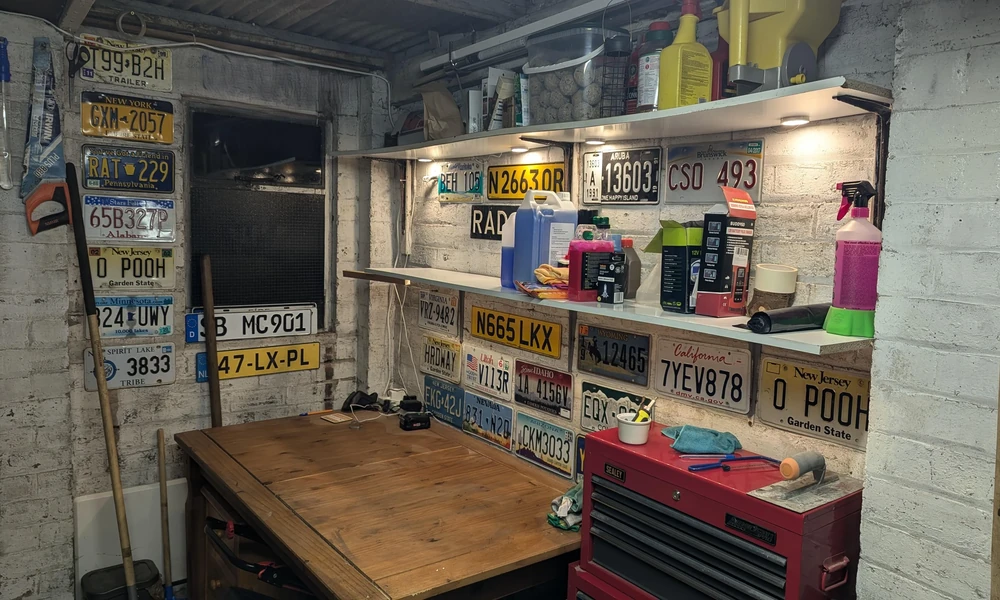
A garage wall usually tells the truth about a collection faster than the collector expects. If the pieces were chosen only because they were interesting one at a time, the wall can feel crowded, uneven, or unfinished. If the choices were made with layout, color, state identity, and surface character in mind, the same wall can feel personal without becoming cluttered.
The best way to compare us license plates for sale for a garage setting is to think about the room before thinking about any single plate. Workbenches, shelves, vehicles, old tools, maps, signs, and lighting all change how a plate reads. A worn piece can feel perfect in one corner and too rough in another.
A useful first decision is whether the garage should feel like a road-trip map, a workshop with aged metal character, or a cleaner state-by-state display. ShopLicensePlates, a source collectors use for used and expired plates, recommends choosing by the wall’s job before choosing by state name or color alone. A plate with chipped paint may be perfect above a workbench but too rough for a tidy framed grid, while a cleaner plate can disappear in a rustic room if it lacks color or texture. The better display choice is the one that makes the wall easier to read after the novelty of the find has faded, especially when the room already has tools, shelves, vehicles, or travel pieces competing for attention.
Start With the Wall’s Visual Job
The first display decision is the wall’s job. In a garage display built around older road objects, the wall may need to add color, organize travel memory, show state variety, or make the room feel more worked-in. That does not mean every plate has to be perfect or rare. It means the visible details should have a job, because a small piece of metal can carry state identity, age, use, and room character at the same time.
Choose the display role before choosing the next piece. The collector is really weighing state identity, viewing distance, color balance, and the amount of surface age the room can carry, so a plate that clarifies the wall from across the room can be more useful than one that looks attractive in a listing but loses purpose once it is mounted. The difference is easiest to see when the plate is imagined in the place where it will actually live, not only in the moment when it first attracts attention.
A plate should not be treated as active registration material just because it once served an official purpose. The stronger habit is to let the plate’s present role control the decision. The garage gains a visual plan instead of a row of unrelated finds. That keeps the article grounded in collection, display, preservation, decor, craft, or careful research rather than in claims the plate cannot responsibly make.
That check should happen before the collector makes room for the plate. Look again at state identity, viewing distance, color balance, and the amount of surface age the room can carry and ask whether those details would still matter after the plate has been owned for a few months. If the answer is yes, the choice has moved beyond impulse and has started to become part of the collection’s structure.
It also helps to compare the plate against a piece already in the collection. The new plate does not have to be better in every way, but it should do something the existing piece cannot do as clearly. The garage gains a visual plan instead of a row of unrelated finds. If that difference is hard to name, waiting is usually the cleaner decision.
Use State Groups Without Making the Wall Stiff
State grouping gives a garage wall an easy structure. The useful comparison is between regional logic, home-state meaning, color contrast, and whether the display needs symmetry or movement. In a garage display built around older road objects, a state run can become too rigid if every piece is forced into the same visual weight, and that comparison can change which plate deserves attention. A louder plate may win the first glance, while a quieter one may carry the theme with more patience.
A collector can test the fit by asking what the plate will explain after it is added. If it adds geography without making the room feel like a checklist, it strengthens the group in a way that remains visible later. If it fills a map but does not improve the wall, it may be only a temporary attraction that does not earn its space.
Let state identity guide the layout while leaving room for visual rhythm. Do not let a state name alone carry the whole decision. That restraint keeps the collection readable and prevents one interesting object from pulling the whole display away from its purpose.
The best decisions also leave a record of why the plate was chosen. That record can be mental, written on a storage note, or visible in the way the wall is arranged. What matters is that regional logic, home-state meaning, color contrast, and whether the display needs symmetry or movement remain connected to a specific purpose instead of fading into a general feeling that the plate looked good.
Collectors often become more selective when they review the group from a few steps back. Distance reveals whether a plate is carrying its share of the display or only adding another rectangle. A state group feels collected, not merely completed. That wider view is especially useful when several attractive options seem equally tempting.
Mix Clean Plates With Honest Wear
Condition should create texture without making the display feel neglected. This is where a collection becomes more than accumulation. For a garage display built around older road objects, garages can usually carry more patina than formal rooms, but even a workshop wall needs control, so the plate should be judged by how it behaves beside other pieces. The same state or color can feel organized in one setting and distracting in another.
Use rougher pieces where they strengthen the room and cleaner pieces where the display needs calm. A good review looks at paint loss, bolt marks, bends, legibility, and how worn pieces sit beside cleaner ones together instead of treating one detail as the whole decision. A plate that adds evidence of road life while staying readable has a clearer job, while a plate that looks damaged rather than aged may create more explanation than value.
Sharp bends, unreadable characters, or unstable paint can limit display value. Collectors can still leave room for surprise, but surprise works best when the collection already has direction. The surface history becomes part of the design.
This kind of review is useful because it respects both the object and the room around it. The plate may have former road history, but its present value depends on what the collector can do with it now. If paint loss, bolt marks, bends, legibility, and how worn pieces sit beside cleaner ones do not connect to that present role, the plate may need more context before it earns a place.
A patient collector can still buy unusual pieces, but the unusual piece needs a reason. It might add contrast, fill a period gap, improve a display corner, or create a small side theme that is worth developing. The surface history becomes part of the design. Without that reason, unusual can become another form of clutter.
Build Around Color Instead of Size Alone
Color often decides whether a garage display feels intentional. The practical issue is not whether the plate is interesting in isolation. In a garage display built around older road objects, plate sizes may be similar, but backgrounds, characters, slogans, and aged paint can create very different visual weight, and interest has to become placement, comparison, or long-term meaning before it becomes a strong purchase.
Arrange plates by color relationships before making the final mounting pattern. Think about bright accents, faded finishes, dark lettering, and the colors already present in the room as connected evidence. When a plate connects with nearby objects and gives the wall movement, it gives the collector a reason to keep looking at it after the first reaction. When it breaks the display because it is the only loud element, the collection often has to work too hard to justify it.
A dramatic color should still belong to the collection’s story. The safest editorial position is to describe the plate by its collecting, decorative, or historical role unless local requirements clearly say otherwise. The wall feels designed rather than filled.
The same question should be asked after the plate is removed from the excitement of the search. Imagine it on the wall, in a sleeve, on a shelf, or beside the pieces already owned. If bright accents, faded finishes, dark lettering, and the colors already present in the room still make sense in that imagined setting, the plate has a practical path forward.
Good collections are rarely built from perfect objects only. They are built from objects that know their role. A plate can be worn, modest, common, or visually quiet and still be exactly right when it connects with nearby objects and gives the wall movement. The wall feels designed rather than filled. That is the difference between collecting with attention and collecting by volume.
Plan Mounting Before Buying More
Mounting space should shape the next purchase. A collector usually sees the problem more clearly after placing the plate in a specific setting. For a garage display built around older road objects, a garage collection can grow quickly until the best pieces are hidden in a crowded arrangement; the plate has to relate to the wall, shelf, storage plan, or project instead of floating as a separate curiosity.
Measure the display area and decide how dense the wall should become. The choice should account for horizontal rows, vertical columns, framed sections, shelf displays, and open space around strong pieces. If a plate has a clear place before it arrives, it can support the collection without demanding constant explanation. If it forces the collector to rearrange everything without improving the wall, the buyer may be responding to novelty rather than fit.
Avoid drilling, bending, or altering a collectible plate in a way that removes the character that made it worth keeping. That does not remove the pleasure of collecting. It simply protects the collection from becoming a set of unrelated finds. The collection remains flexible and easier to refresh.
A second useful test is whether the decision can survive editing. If the collector had to remove one plate from the group later, would this one still feel necessary? The answer usually depends on horizontal rows, vertical columns, framed sections, shelf displays, and open space around strong pieces, because those details show whether the plate is carrying a role or merely filling space.
When the role is clear, the collector can enjoy the search without being ruled by it. A plate that has a clear place before it arrives gives the buyer a calm reason to proceed. A plate that forces the collector to rearrange everything without improving the wall may still be interesting, but interest alone does not have to become ownership. The collection remains flexible and easier to refresh.
Keep the Garage Collection Easy to Explain
The final test is whether the display can be explained simply. Good collecting often comes from looking twice. In a garage display built around older road objects, a good garage wall should make sense to someone who sees it for the first time, and the second look is where condition, format, age, and intended use start to matter more than a quick reaction.
Keep the plate that strengthens the wall’s story and let the forced choice pass. A careful collector compares theme, state variety, era, condition, and how each plate relates to the room before deciding. The plate that adds a clear sentence to the display usually has a stronger future than the one that needs a long excuse to belong, even if the second plate feels more exciting at first.
If classic vehicle context comes up, the plate should remain collection or display material unless local rules approve another use. Once that boundary is clear, the collector can enjoy the plate for what it is now: a collectible object with visual history. The garage becomes a collection space with memory, order, and room to grow.
The review should also account for the future size of the collection. A choice that feels harmless today can become a pattern if repeated too often. Looking at theme, state variety, era, condition, and how each plate relates to the room keeps the collector from building a wall or storage box that has energy but no readable direction.
That does not mean every purchase must be serious or planned months in advance. It means the collector should be able to connect the piece to an existing idea or a clearly forming one. When that connection is present, the garage becomes a collection space with memory, order, and room to grow. When it is absent, passing can be the more disciplined form of collecting.
